





Is Your RTL-SDR a Fake? 5 Warning Signs You Bought a Clone
As the RTL-SDR V4 becomes the gold standard for hobbyist radio, the market has been flooded with "clones"—counterfeit devices that look like the real deal but perform like 10-year-old scrap. Many of these appear on sites like AliExpress and eBay at suspiciously low prices. If you bought a "bargain" SDR and it’s underperforming, you might be the victim of a clone. Here are the five definitive signs that your device is a fake.
1. The "Screw Alignment" Dead Giveaway
The most immediate way to spot a counterfeit RTL-SDR Blog V4 is by looking at the end panels. On a genuine V4, the screws on the side panels are positioned diagonally (offset). Most mass-produced clones use a standard generic case where the two screws are aligned horizontally or vertically in a straight line. If your screws aren't diagonal, you are likely looking at a generic PCB inside a copied shell.
2. Inferior Tuner Chips (R828D vs. Generic)
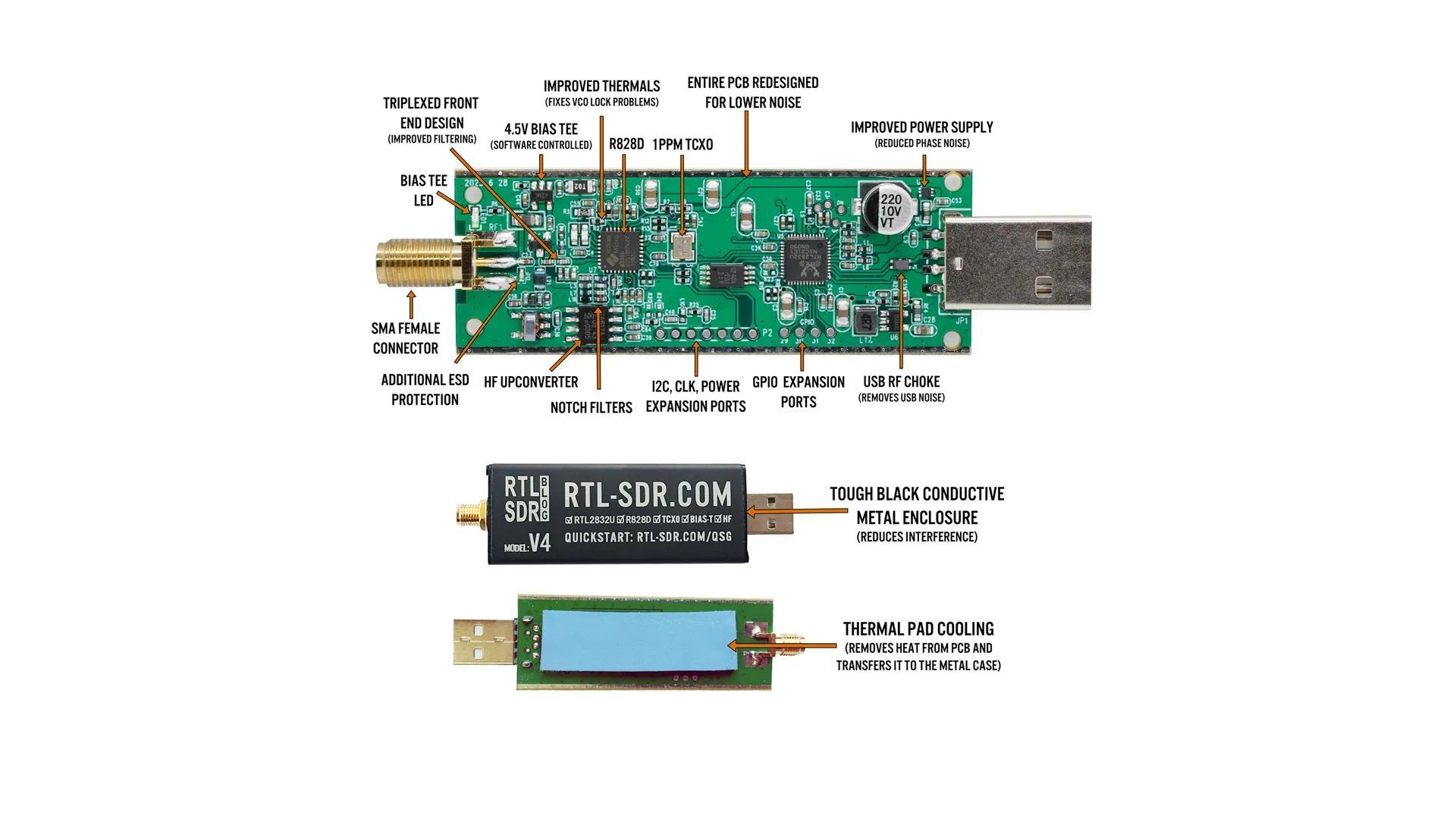
The RTL-SDR V4 is unique because it uses the R828D tuner chip combined with a triplexer and upconverter circuit. Many AliExpress clones are actually just old "V3" style hardware or even cheaper FC0012 chips rebranded to look like a V4. These clones lack the specific hardware filtering that makes the V4 special, leading to massive interference from FM radio stations and poor sensitivity on the HF bands.
3. The "Brass vs. Silver" Connector Test
Take a close look at the SMA (antenna) connector. A genuine RTL-SDR Blog V4 utilizes a high-quality all-brass female connector for better conductivity and durability. Many counterfeits save cents by using cheaper silver-colored or nickel-plated connectors. While it seems like a small detail, it is a clear indicator of the component quality used throughout the entire board.
4. Software Detection Failures
The V4 requires specific drivers to function. If you plug in your device and it is immediately recognized as a generic "RTL2832U" without needing the V4-specific DLLs, or if it shows a default serial number like "00000001" while failing to tune to HF frequencies correctly, you've likely bought a rebranded V3 clone. Real V4 units utilize a different signal path that software must specifically account for.
5. Missing Thermal Pads and Poor Heat Dissipation
Genuine RTL-SDR Blog units are designed to use the aluminum case as a heat sink. If you were to open a genuine unit, you would find a thermal pad connecting the chips to the metal shell. Clones often skip this step entirely to save on assembly costs. If your SDR gets extremely hot to the touch but the signal starts "drifting" or fading after 10 minutes, the internal components are likely baking without proper cooling.
Why Buying Genuine Matters
A fake SDR isn't just a "cheaper version"—it’s a broken tool. Clones often suffer from:
- Phantom Signals: Hearing radio stations where they shouldn't be (aliasing).
- No HF Support: The "Built-in Upconverter" advertised is often missing or non-functional.
- No Bias Tee: You won't be able to power active antennas or LNAs.
- Higher Noise Floor: Cheap regulators introduce static that drowns out weak signals.
Where to Get a Guaranteed Genuine RTL-SDR V4
The only way to ensure you are getting the full performance of the V4 design—including the improved filtering and R828D architecture—is to buy from a trusted, authorized seller. Avoid the "lottery" of unverified marketplace listings where sellers disappear after a week.
Don't gamble with your hobby. You can get the 100% authentic RTL-SDR V4 directly from our stock below by pressing "Add to Cart" or by clicking the product for more info.
No posts found
Write a review





We support all major card and digital payment options. More local methods are available and shown during checkout.
You enter into a binding sales contract once you have received an 'order confirmation and sales receipt' email from us, in line with our Sales & Delivery conditions. Therefore, sdrstore.eu has the right to cancel your order in the event of technical problems, delivery failure, Fair use policy and other similar situations.




Your payments are protected by advanced encryption and 3-D Secure authentication for safe online shopping.